Bankroll Allocation Tactics for Progressive Prize Pursuit in Touchscreen Slot Games
Amir Lehmann · Aug 19, 2026
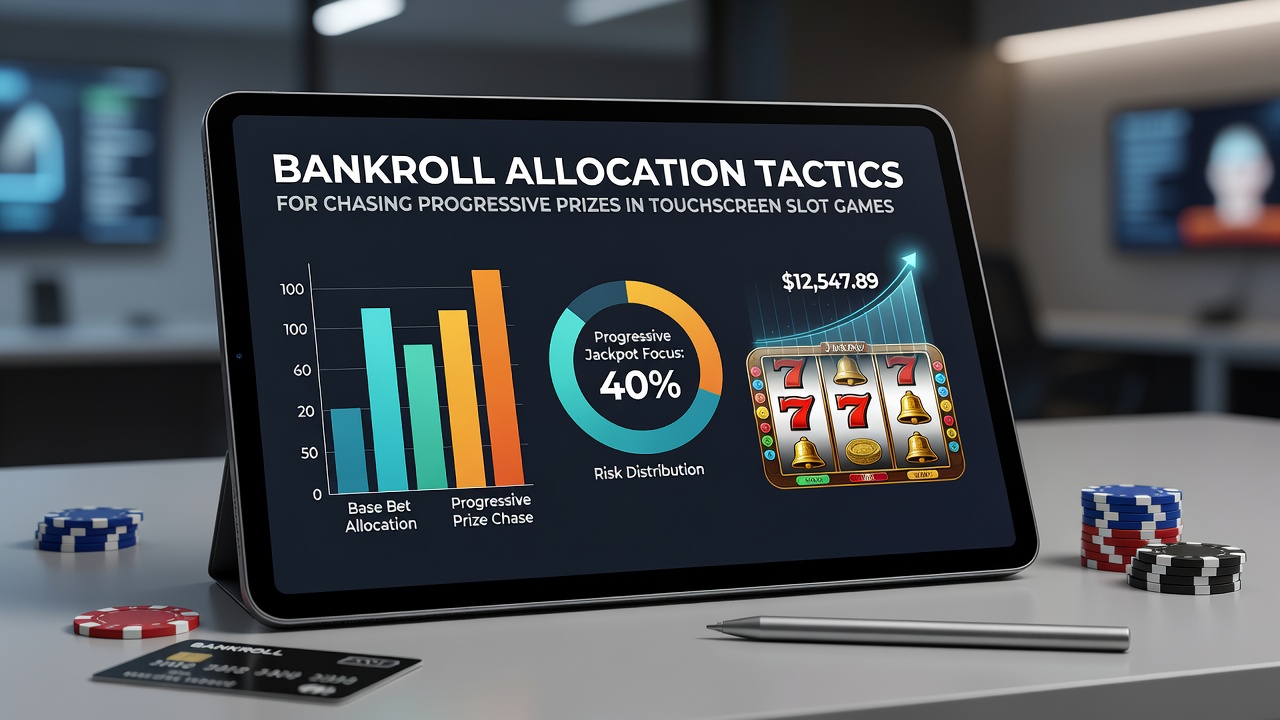
Bankroll Allocation Tactics for Progressive Prize Pursuit in Touchscreen Slot Games
Players who target progressive prizes on touchscreen slots often divide their funds into distinct portions that match the payout structure of these games, where a percentage of each wager contributes to a shared jackpot that grows until triggered. Data from regulatory reports indicate that progressive slots typically allocate between 1% and 3% of total wagers to the jackpot pool, which affects overall return-to-player percentages compared with fixed jackpot titles.
Core Principles of Progressive Slot Bankroll Division
Observers note that effective allocation begins with separating a primary session fund from a dedicated progressive chase reserve, and the reserve portion usually represents 20% to 40% of the total available bankroll according to industry analyses. Those who study player behavior find that touchscreen interfaces encourage smaller, more frequent bets because swipe and tap mechanics reduce the time between spins, which in turn accelerates jackpot contributions while increasing the number of decisions per hour.
Researchers at academic institutions have examined how bet sizing interacts with progressive triggers, and findings show that maximum-bet requirements on many networked progressives demand at least 5% to 10% of the session bankroll reserved for each qualifying spin sequence. This approach allows players to remain eligible for the top prize without depleting funds before the jackpot reaches statistically attractive levels.
Segmenting Funds Across Multiple Sessions
Allocation models frequently recommend dividing the chase reserve across several gaming sessions rather than committing everything in one sitting, because progressive jackpots on touchscreen platforms update in real time and can require hundreds or thousands of spins to reach breakeven points. Figures from gaming research centers reveal that average progressive jackpots in major networks reset between $50,000 and $200,000 and climb at rates that reward extended play across days or weeks instead of concentrated bursts.
Practical Division Ratios Used by Experienced Participants
- 40% allocated to standard play that builds toward bonus features without chasing the top prize
- 35% reserved exclusively for maximum-bet spins required to qualify for progressive tiers
- 25% held as a buffer for extended dry spells when the jackpot meter moves slowly
Touchscreen devices introduce additional considerations because screen size and touch latency can influence bet confirmation speed, and operators report that mobile progressive networks experience higher spin volumes during evening hours when connectivity remains stable. Those who track performance data observe that maintaining a separate low-volatility slot fund alongside the progressive reserve helps offset short-term losses while the main jackpot accumulates.

Adjusting Allocations Based on Jackpot Size and Network Data
Allocation tactics shift when jackpot meters exceed certain thresholds, and analysts at Nevada Gaming Control Board publications note that contribution rates and reset values vary by jurisdiction and network provider. Players often increase the maximum-bet portion of their reserve once a progressive reaches 150% of its average payout history, because historical payout records indicate higher return probabilities at those levels.
Session timers built into many touchscreen platforms allow users to set spending limits that automatically pause play once the allocated progressive fund is exhausted, and this feature aligns with recommendations from Australian Gambling Research Centre studies on controlled expenditure. The same studies show that participants who pre-define both time and monetary boundaries for progressive play maintain longer overall engagement without rapid depletion of total bankrolls.
Monitoring Contribution Rates and Network Connectivity
Progressive networks on touchscreen devices require stable connections because interrupted spins can disqualify a player from the current jackpot cycle, and allocation plans therefore include a small connectivity buffer fund for data charges or venue access fees. Operators update contribution percentages quarterly in many markets, and those percentages directly influence how quickly the reserve portion should be deployed versus preserved.
Case examples from multi-site operators demonstrate that players who track both local and wide-area progressive meters allocate higher percentages to wide-area titles once the meter surpasses regional averages, because wider networks accumulate contributions from more machines and reach payout thresholds more frequently.
Conclusion
Bankroll allocation for progressive prizes in touchscreen slots centers on separating dedicated reserves, adjusting bet sizing to network requirements, and monitoring real-time meter data across multiple sessions. Regulatory records and academic analyses consistently show that structured division of funds, combined with device-specific timing controls, supports sustained participation while the jackpot continues to build. These methods reflect observable patterns in player data rather than guarantees of outcome, and they remain adaptable as network rules and contribution rates evolve through 2026 and beyond.