Cascading Reel Dynamics Reshape Win Frequency Across Progressive Jackpot Networks
Otto Griffin · Aug 12, 2026

Cascading Reel Dynamics Reshape Win Frequency Across Progressive Jackpot Networks
Cascading reel systems replace traditional single-resolution spins with sequences where winning symbols disappear and new ones drop into place, allowing multiple outcomes from one initial wager, while progressive jackpot networks pool contributions across linked machines or online instances to build shared prize pools that trigger based on specific symbol alignments or random events. Observers note that this mechanic directly changes how operators and regulators calculate win frequency because each cascade round adds potential payout events without requiring additional bets, and data from various gaming jurisdictions shows that frequency metrics must account for both the initial spin and all subsequent drops in a single cycle.
Core Mechanics of Cascading Systems
Standard slot mathematics treats each spin as an independent trial with a fixed probability of winning combinations landing on paylines or clusters, yet cascading implementations introduce chained resolutions where the game engine evaluates new symbol arrangements after removals occur, and researchers have documented that average win frequency per paid spin rises because one wager can generate several winning evaluations in succession. Experts point out that the number of cascades per spin follows geometric distribution patterns in many titles, with each additional drop carrying its own probability of forming new wins, and this structure requires updated random number generator testing protocols to verify that the overall return-to-player remains consistent even as individual outcomes multiply within a single paid round.
Adjustments to Win Frequency Formulas
Win frequency calculations traditionally divide total winning spins by total spins played, but cascading mechanics demand formulas that incorporate the expected number of cascade events per spin, since each cascade can produce its own payout and therefore inflates the observed frequency when measured only at the spin level. Industry reports indicate that simulation software now runs thousands of cascade sequences to derive accurate frequency figures, and those who model these games find that the effective frequency can increase by factors ranging from 1.3 to over 2.0 depending on the cascade depth and symbol removal rules in use. Regulatory testing labs adjust their certification processes accordingly, requiring documentation of both base spin outcomes and full cascade trees so that published frequency statistics reflect the complete resolution path rather than isolated initial results.
Integration with Progressive Jackpot Networks
Progressive jackpot networks collect a small percentage of each wager into a shared pool that grows until specific conditions trigger a payout, and cascading reels complicate contribution tracking because a single bet can trigger multiple symbol evaluations that might independently meet jackpot trigger criteria. Data shows that some network protocols count only the initial spin for contribution purposes while others evaluate every cascade round separately, creating variation in how quickly pools grow and how often smaller jackpot tiers award. Those who administer multi-site progressive systems therefore recalibrate seed values and contribution rates to maintain target hit frequencies, and evidence from operational logs reveals that titles with deep cascade potential often require lower per-spin contribution percentages to prevent pools from inflating too rapidly relative to actual play volume.
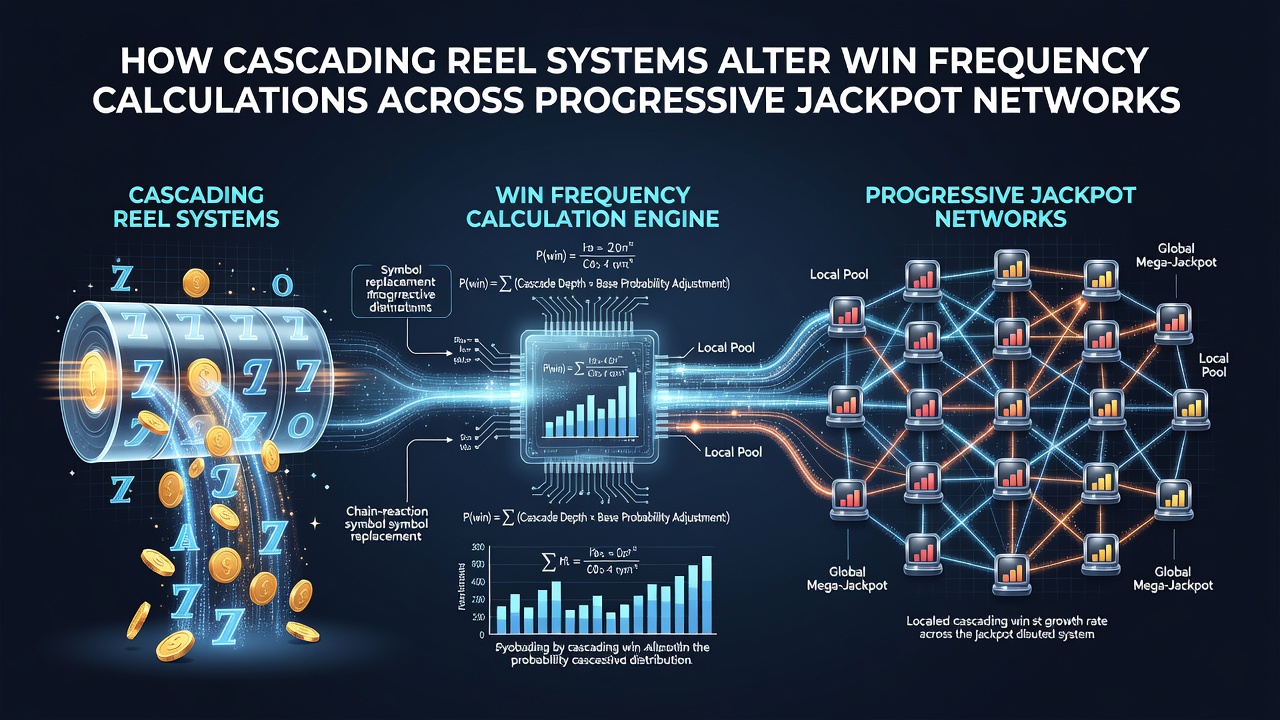
Network operators must also consider that a cascade sequence can produce multiple qualifying combinations in rapid succession, and this possibility alters the statistical model used to forecast jackpot hit rates across the entire linked estate. Studies conducted by independent testing agencies demonstrate that the variance in time-between-jackpot-awards narrows when cascades multiply evaluation opportunities, which in turn affects player perception of jackpot accessibility even though the underlying random processes remain unchanged.
Regulatory and Reporting Implications
Gaming control authorities in multiple regions require detailed disclosure of how cascade mechanics influence reported metrics, including the separation of base-game frequency from cascade-augmented frequency so that published figures remain comparable across different game types. According to analyses released by the Nevada Gaming Control Board, operators submitting new cascading titles for approval must provide simulation data covering at least ten million spins with full cascade resolution recorded, allowing regulators to verify that advertised win frequencies align with actual play outcomes. Similar requirements appear in documentation from the Australian Communications and Media Authority, where emphasis is placed on transparent communication of how progressive contributions interact with multi-resolution spin mechanics.
Conclusion
Cascading reel systems increase the number of win evaluations per paid spin, necessitating revised mathematical models that capture the full sequence of resolutions when calculating frequency statistics for progressive jackpot networks. Network operators adjust contribution rates and seed amounts based on these updated models, while regulatory bodies enforce simulation standards that account for every cascade outcome. teh result is a more precise alignment between theoretical win frequency, reported performance data, and the actual distribution of payouts across linked progressive environments.