Cluster Pays Mechanics Spread Through Diverse International Gaming Regions
Olivia Otto · Aug 22, 2026
Cluster Pays Mechanics Spread Through Diverse International Gaming Regions
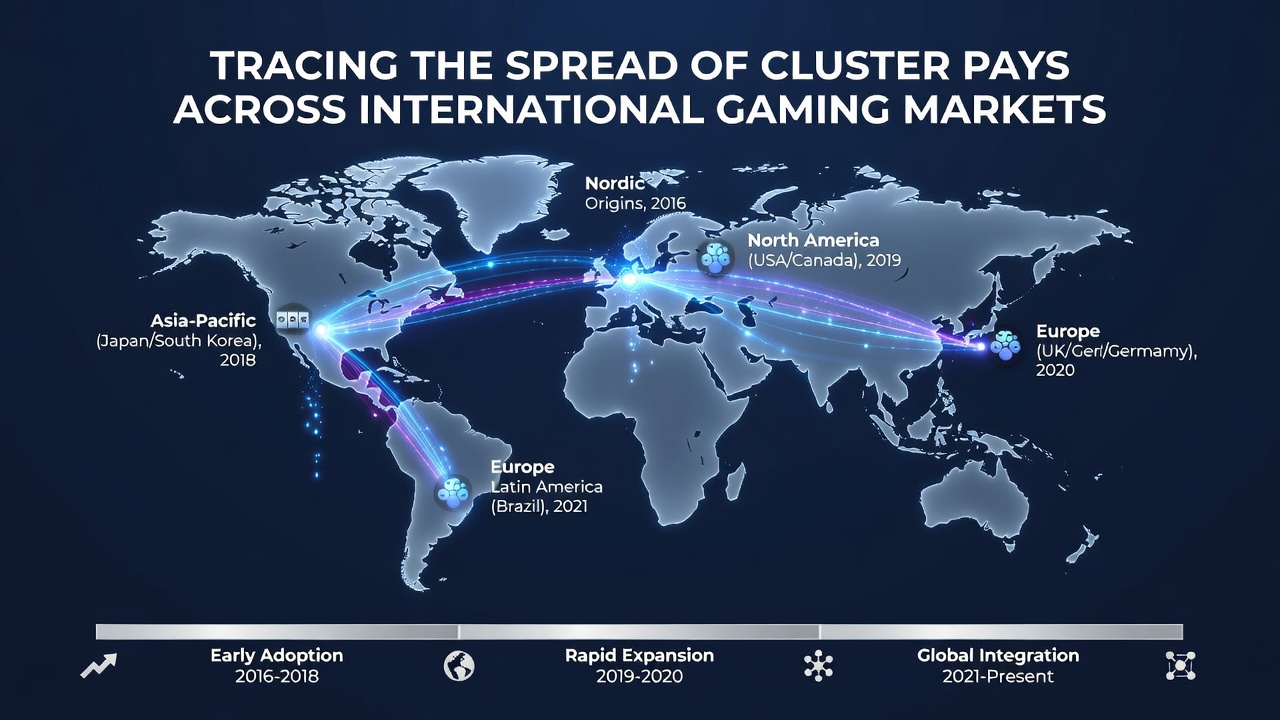
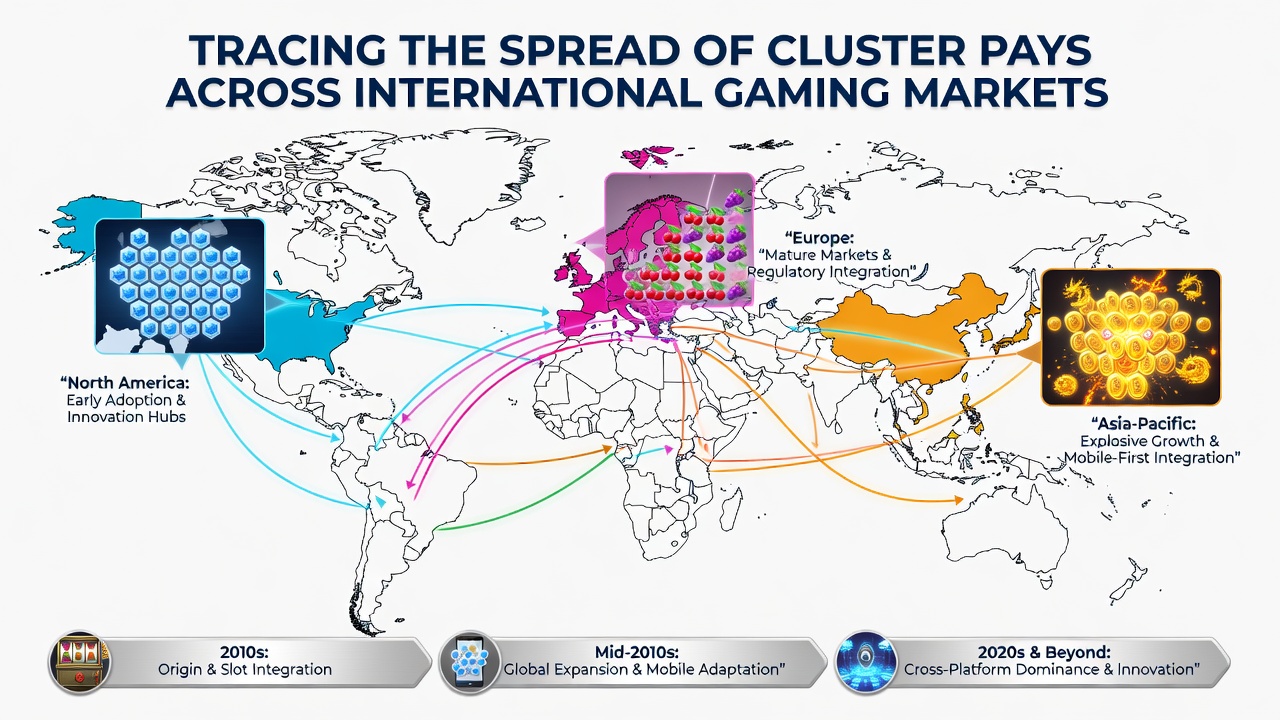
Cluster pays mechanics first emerged in specific Nordic gaming studios during the early 2010s, then moved steadily into broader European markets before reaching North America, Asia, and Australia through successive software releases and regulatory approvals. Developers adapted the format to replace traditional paylines with adjacent symbol groupings, and this shift altered payout calculations in hundreds of titles released each year.
Early Adoption Patterns in European Markets
Scandinavian operators introduced cluster pays titles around 2012, and data from regional gaming associations shows rapid uptake among players who preferred the mechanic's visual grouping style over fixed lines. Titles from providers like NetEnt and Play'n GO helped establish the format in Sweden, Finland, and Denmark, where mobile platforms supported quick testing of new grid sizes. Observers note that by 2015 the mechanic had crossed into larger operators in the United Kingdom and Germany, with software updates allowing seamless scaling across desktop and handheld devices.
Regulators in these markets required clear disclosure of how clusters formed and paid, which encouraged standardized testing protocols that later spread to other jurisdictions. Industry reports indicate that cluster pays games accounted for a growing share of new releases in Europe through the late 2010s, while traditional line-based slots retained strong positions in land-based venues.
Expansion Across North America and Asia
North American markets began integrating cluster pays content after major software suppliers secured licenses in New Jersey and Pennsylvania around 2018, and similar patterns appeared in Michigan and West Virginia by 2020. State gaming boards reviewed the mechanic's random number generator implementations before authorizing deployment, and figures from the Nevada Gaming Control Board reveal steady increases in approved cluster pays titles on both online and retail floors through 2023. Canadian provinces followed comparable approval processes, with Ontario's regulated market opening additional pathways for the format after its 2022 launch.
Asian jurisdictions showed parallel growth once suppliers localized graphics and themes for regional preferences. Data from gaming trade groups indicates that operators in Japan, South Korea, and parts of Southeast Asia incorporated cluster pays games into their online portfolios, often pairing them with progressive jackpot systems already popular in those territories. Mobile-first platforms accelerated distribution, since cluster mechanics translated efficiently to touch-screen interfaces without requiring complex payline mapping.
Developments in Australia and Emerging Markets
Australian operators adopted cluster pays mechanics after updates to interactive gambling regulations permitted expanded online offerings, and reports from the Australian Communications and Media Authority document increased availability of the format on licensed platforms by 2024. Game studios adjusted volatility settings to match local player preferences, while providers maintained compliance with strict advertising and responsible gaming requirements. Latin American markets, particularly in Brazil and Mexico, began seeing cluster pays releases after legislative changes opened regulated online channels, with local operators partnering with established international suppliers to accelerate rollout.
By August 2026 several multi-jurisdictional operators had synchronized cluster pays libraries across their European, North American, and Asian skins, using unified back-end systems to manage RTP configurations and bonus features. Research from the Canadian Centre for Gaming Research highlights that cross-border data sharing among regulators helped standardize evaluation criteria for cluster detection algorithms, reducing approval timelines in newer markets.
Technical Adaptations and Market Integration
Software engineers refined cluster detection code to handle larger grids and cascading sequences, and these improvements supported integration with hold-and-win, avalanche, and multiplier systems already present in many international catalogs. Operators in multiple regions reported that cluster pays titles performed consistently across varying stake levels, which aligned with tiered regulatory frameworks in different countries. Academic papers published in the Journal of Gambling Studies have examined how cluster mechanics influence session length and player engagement metrics, providing quantitative insights that regulators and operators reference during licensing reviews.
What's interesting is how the mechanic's visual clarity helped operators meet transparency obligations in markets with strict disclosure rules. Those who've studied adoption curves note that cluster pays content often appeared alongside Megaways and other variable-ways formats, allowing platforms to diversify their libraries without duplicating core mathematics.
Conclusion
Cluster pays mechanics have moved from niche Nordic releases to a standard option in slot portfolios across regulated markets on multiple continents. Regulatory bodies in the United States, Canada, Australia, and parts of Asia have each established review processes that accommodate the format, while suppliers continue to iterate on grid sizes, symbol interactions, and feature combinations. Data from industry associations and academic sources shows sustained release volumes through 2026, with operators maintaining the mechanic as one component within broader game mixes. The pattern of measured expansion continues as new jurisdictions finalize online gaming frameworks and existing markets refine technical standards.