Dual Direction Payouts: Investigating Bidirectional Reel Mechanics in Modern Slot Designs
Amir Lehmann · Jul 11, 2026

Dual Direction Payouts: Investigating Bidirectional Reel Mechanics in Modern Slot Designs
Slot developers have introduced bidirectional reel mechanics as a way to expand payout opportunities without altering core random number generator frameworks, and these systems evaluate symbol combinations in both left-to-right and right-to-left sequences across the same spin. Industry reports from the Nevada Gaming Control Board show that such configurations appear in a growing share of new titles released after 2023, with operators noting higher average bet volumes per session compared to traditional unidirectional formats. The mechanic operates by scanning reel strips from either end, which doubles the potential matching paths while preserving the fixed reel positions and symbol distributions that define each game.
How Bidirectional Evaluation Alters Standard Reel Logic
Traditional slots calculate wins only when matching symbols align from the leftmost reel toward the right, yet bidirectional designs add a second scan that begins at the opposite end and moves leftward. This approach creates overlapping win lines on the same grid, and manufacturers achieve it through software layers that process two separate payout tables during a single reel stop sequence. Observers note that the added computation occurs within milliseconds, which keeps gameplay speed comparable to conventional machines even as the total number of evaluated combinations rises. Research from the University of Nevada's gaming laboratory indicates that bidirectional evaluation maintains the same return-to-player percentages when reel strips and hit frequencies receive proper calibration during development.
Integration With Existing Feature Structures
Many bidirectional titles combine the dual-direction scan with established mechanics such as expanding wilds, stacked symbols, and free spin rounds. When a wild lands in a central position, it may complete lines in both directions simultaneously, which multiplies the effect of that single symbol across more outcomes. Data compiled by the Canadian Gaming Association reveals that games featuring this combination report elevated feature trigger rates because the second evaluation direction increases the chance that a partial match becomes a full payout. Developers adjust reel weighting accordingly, ensuring that the overall volatility profile stays within the range operators request for their target markets.
Technical Implementation Across Hardware Platforms
Land-based cabinets and online platforms both support bidirectional reels through updated firmware and client-side scripts, respectively. In physical machines the dual scan runs on the same central processing unit that handles reel animation, while online versions execute the logic within browser or app environments. Engineers program separate win-detection routines that activate in parallel, and testing protocols require verification that both directions produce identical results under identical random seeds. Reports from the Australian Communications and Media Authority document successful certification of multiple bidirectional titles in 2024 and 2025, confirming compliance with existing technical standards for randomness and payout accuracy.
Player Interface Adjustments and Display Clarity
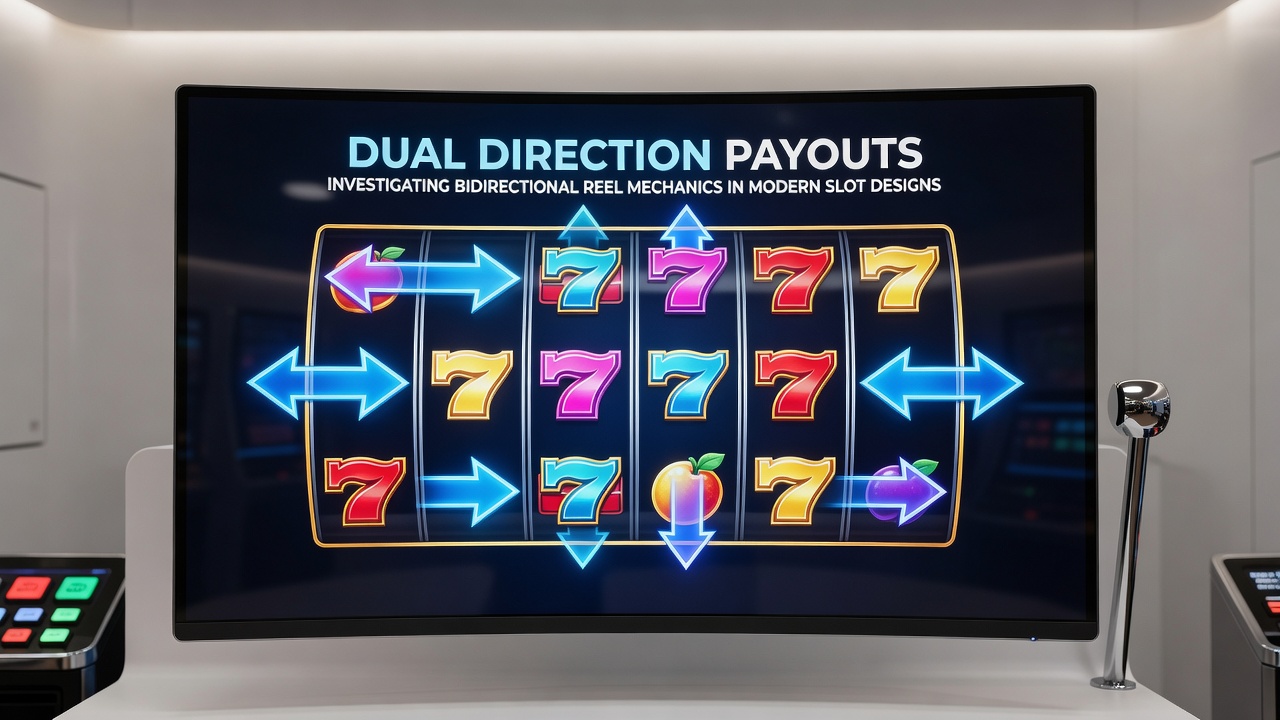
Game designers add visual cues that highlight winning combinations in both directions, often using distinct line colors or animated traces to differentiate the two evaluation paths. This prevents confusion when multiple overlapping wins occur on a single spin, and the interface typically displays the total payout after both scans complete. Studies conducted by the International Association of Gaming Regulators show that clear visual separation improves player comprehension, particularly on smaller mobile screens where reel grids occupy less space. Operators have adopted these display conventions across multiple jurisdictions, which helps maintain consistent player experience regardless of device.
Regulatory Considerations in Multiple Markets
Certification bodies evaluate bidirectional mechanics under the same fairness criteria applied to unidirectional games, focusing on random number integrity and payout verification rather than the direction of evaluation. Agencies in the United States, Canada, and Australia require detailed documentation of the dual-scan algorithms during the approval process, and July 2026 marks the deadline for certain land-based venues to replace older equipment that cannot support updated technical standards. Manufacturers have responded by embedding bidirectional capability in new cabinet releases, allowing sites to meet compliance timelines while introducing the mechanic to fresh audiences. The approach aligns with broader industry shifts toward software-driven features that extend machine lifespan without hardware overhauls.
Statistical Impact on Session Metrics
Analysis of aggregated play data indicates that bidirectional reels tend to produce more frequent but smaller individual wins because the second evaluation direction captures additional low-value combinations. This pattern shifts the distribution of outcomes while preserving the same theoretical return percentage, and operators track these changes through backend reporting tools that separate directional contributions. Research published by the European Gaming Institute demonstrates that the mechanic can reduce the length of losing streaks in certain configurations, although overall bankroll variance remains governed by the underlying reel probabilities. Those who monitor performance across large player pools report stable engagement levels once the interface familiarizes users with the dual payout display.
Future Development Pathways
Engineers continue to explore extensions of bidirectional logic, including diagonal evaluations and rotating reel segments that change direction mid-feature. These experiments build on the foundational dual-scan framework already deployed in current titles, and early prototypes undergo rigorous testing before entering certification pipelines. Trade publications from the gaming sector document ongoing collaboration between developers and testing laboratories to ensure that added complexity does not compromise randomness or payout transparency. As more jurisdictions adopt updated technical standards ahead of the 2026 equipment refresh cycle, bidirectional designs represent one avenue for refreshing existing game libraries without requiring complete redesigns.
Conclusion
Bidirectional reel mechanics expand payout evaluation paths while operating within established regulatory and technical boundaries across multiple markets. The approach integrates with existing features, maintains certified randomness standards, and appears in both land-based and online environments through parallel software implementations. Data from regulatory bodies and research institutions shows measurable effects on win frequency and session metrics without altering core return percentages. Continued refinement of display systems and algorithmic calibration supports broader adoption as operators prepare for equipment updates scheduled through 2026.