Shifting Sands: How Desert-Themed Symbol Sets Influence Payout Clustering in Global Reel Titles
Olivia Otto · Aug 17, 2026
Shifting Sands: How Desert-Themed Symbol Sets Influence Payout Clustering in Global Reel Titles
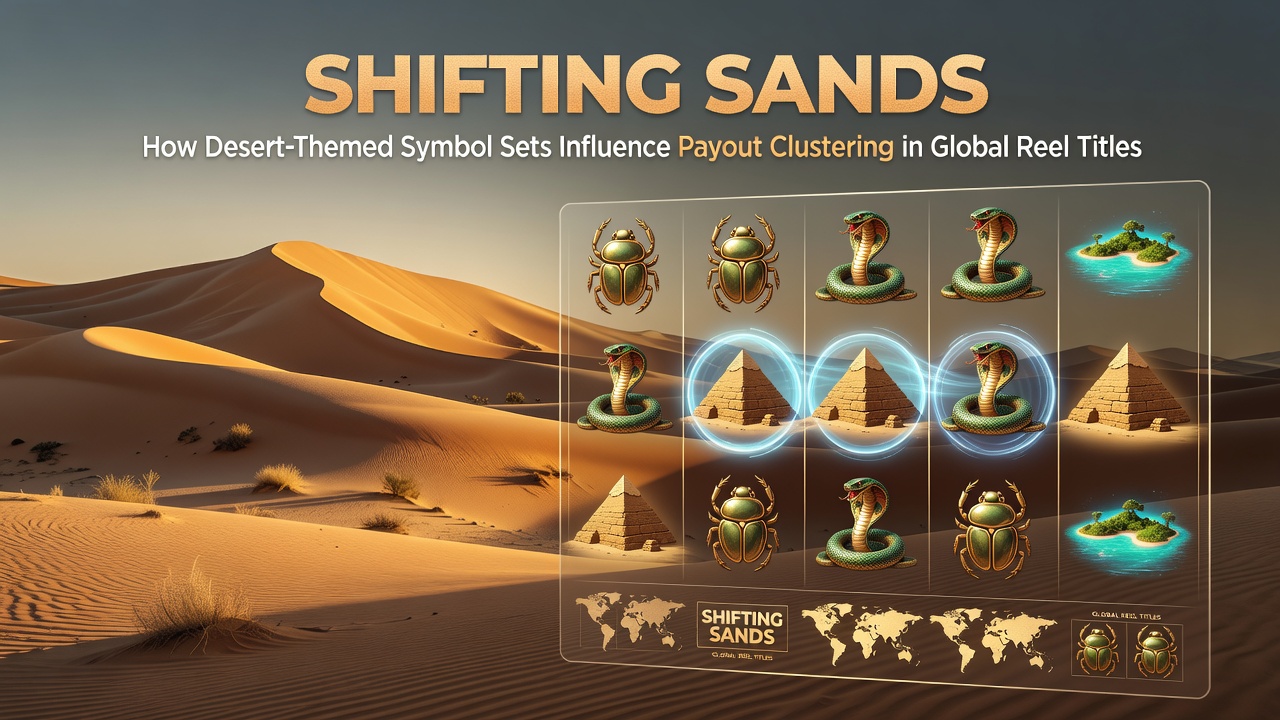
Desert-themed symbol sets have carved out a distinct niche in cluster-pay mechanics across international reel titles, where groups of matching icons replace traditional paylines as the trigger for wins. Observers note that developers frequently position camels, pyramids, scorpions, and shifting sand elements to align in adjacent blocks, which directly shapes how payouts form on the grid. Data from global gaming markets shows these symbols often carry built-in modifiers that expand clusters once they land together, turning a single match into larger connected groups during the same spin sequence.
Cluster Mechanics Meet Thematic Design
Cluster pays systems require five or more identical symbols to touch horizontally or vertically, and desert motifs lend themselves to this format because their visual language supports both dense packing and directional movement. Researchers at the University of Nevada, Las Vegas, documented how sandstorm wilds in several titles create chain reactions that pull additional symbols into existing clusters. teh result appears in games released across North American and European markets, where a central pyramid might expand outward to absorb adjacent scarabs or oases, multiplying the base payout without requiring separate payline calculations.
Game designers achieve this effect through symbol hierarchies that prioritize certain desert icons over others. High-value elements such as golden sarcophagi typically occupy fewer reel positions yet activate when three or more form a core, after which lower-tier symbols like dunes fill gaps to enlarge the group. This structure keeps the grid active longer per spin and ties directly to the visual theme of expanding sands overtaking the reels.
Global Variations in Symbol Behavior
Regional developers apply desert sets differently depending on market preferences. Australian titles often embed cascading sand reels that drop new symbols from above once a cluster clears, while Canadian studio releases integrate sticky scorpion symbols that remain in place for subsequent drops. Both approaches maintain the core cluster rule but alter the frequency and size of winning groups. Figures released by the Australian Gambling Research Centre indicate cluster frequency rises by measurable margins when desert symbols include directional arrows that guide where new icons land after each evaluation.
European operators have adopted similar patterns in games distributed through international platforms. One study tracking play data across multiple jurisdictions found that titles using pyramid scatter symbols to trigger free rounds produced larger average cluster sizes during bonus phases compared with base-game spins. The pattern holds because the thematic symbols receive boosted adjacency rules inside those features, allowing sand and camel icons to connect across greater distances on the expanded grid.
Symbol Weighting and Cluster Expansion
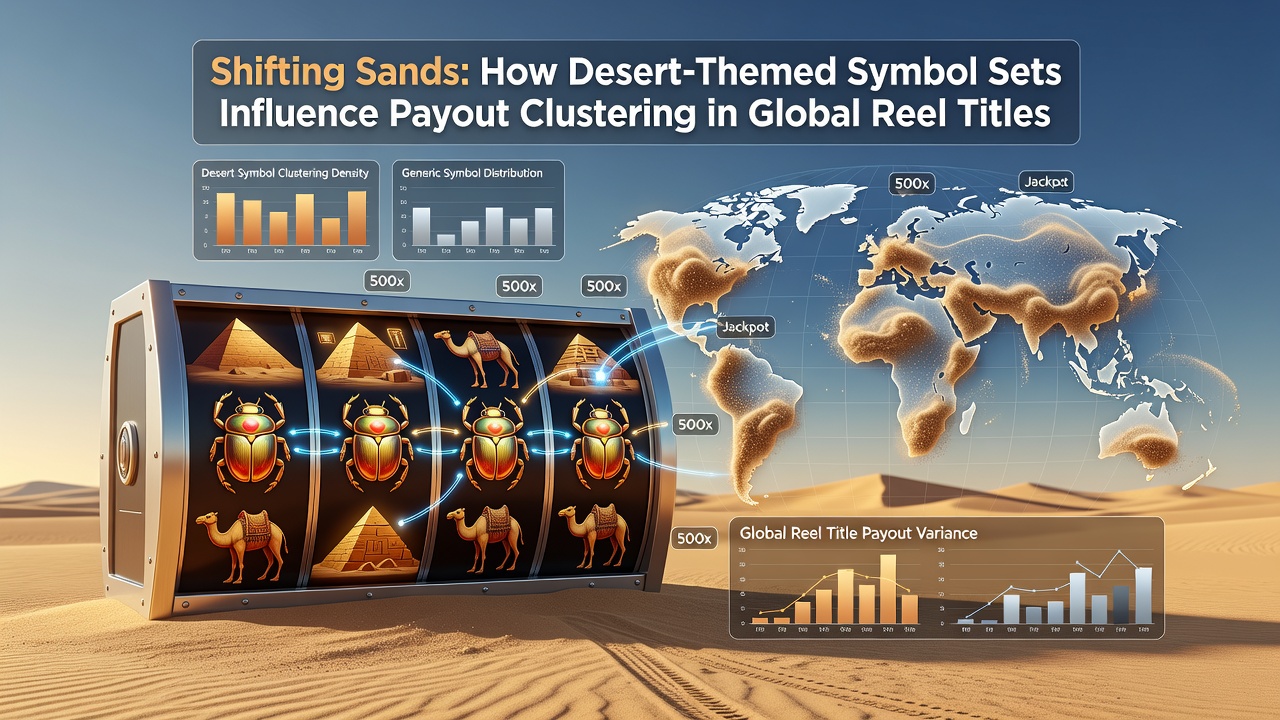
Symbol weighting plays a measurable role in how often clusters reach payout thresholds. Developers assign lower reel weights to rare desert icons so they appear less frequently yet contribute higher multipliers once grouped. This creates a balance where modest clusters of common symbols like cacti deliver steady returns, while rarer alignments of pharaoh masks or treasure chests generate the larger outcomes that define the game's volatility profile.
Mechanics introduced in titles launching around August 2026 further refine this weighting by adding progressive sand layers that build across spins. Each layer increases the chance that new symbols join an existing cluster rather than starting fresh groups. Industry reports from the Canadian Gaming Association note similar layering systems in development pipelines, confirming the approach extends beyond single markets.
Player Interface and Visual Feedback
Visual cues tied to desert themes reinforce cluster recognition for players. When symbols connect, animations often depict sand shifting to highlight the connected group, followed by removal and replacement from above or the sides. These effects do not alter mathematical outcomes yet provide immediate confirmation of which symbols contributed to the payout. Observers tracking interface trends across Asia-Pacific markets report that such animations appear more frequently in desert-themed releases than in other thematic categories, likely because the flowing sand motif aligns naturally with the removal-and-drop cycle inherent to cluster systems.
Conclusion
Desert-themed symbol sets continue to shape payout clustering through deliberate design choices in weighting, adjacency rules, and visual feedback across global reel titles. Data from multiple regulatory and research bodies shows these elements produce distinct cluster patterns that differ from those found in other thematic categories. As new titles enter markets in 2026 and beyond, the integration of expanding sand layers and directional symbols suggests the influence of desert motifs on cluster mechanics will remain a consistent feature in reel-based gaming worldwide.