Stacking the Odds: How Full-Reel Stacks Amplify Hits in Everyday Slot Sessions
Amir Lehmann · Apr 5, 2026

Stacking the Odds: How Full-Reel Stacks Amplify Hits in Everyday Slot Sessions
Breaking Down the Full-Reel Stack Mechanic
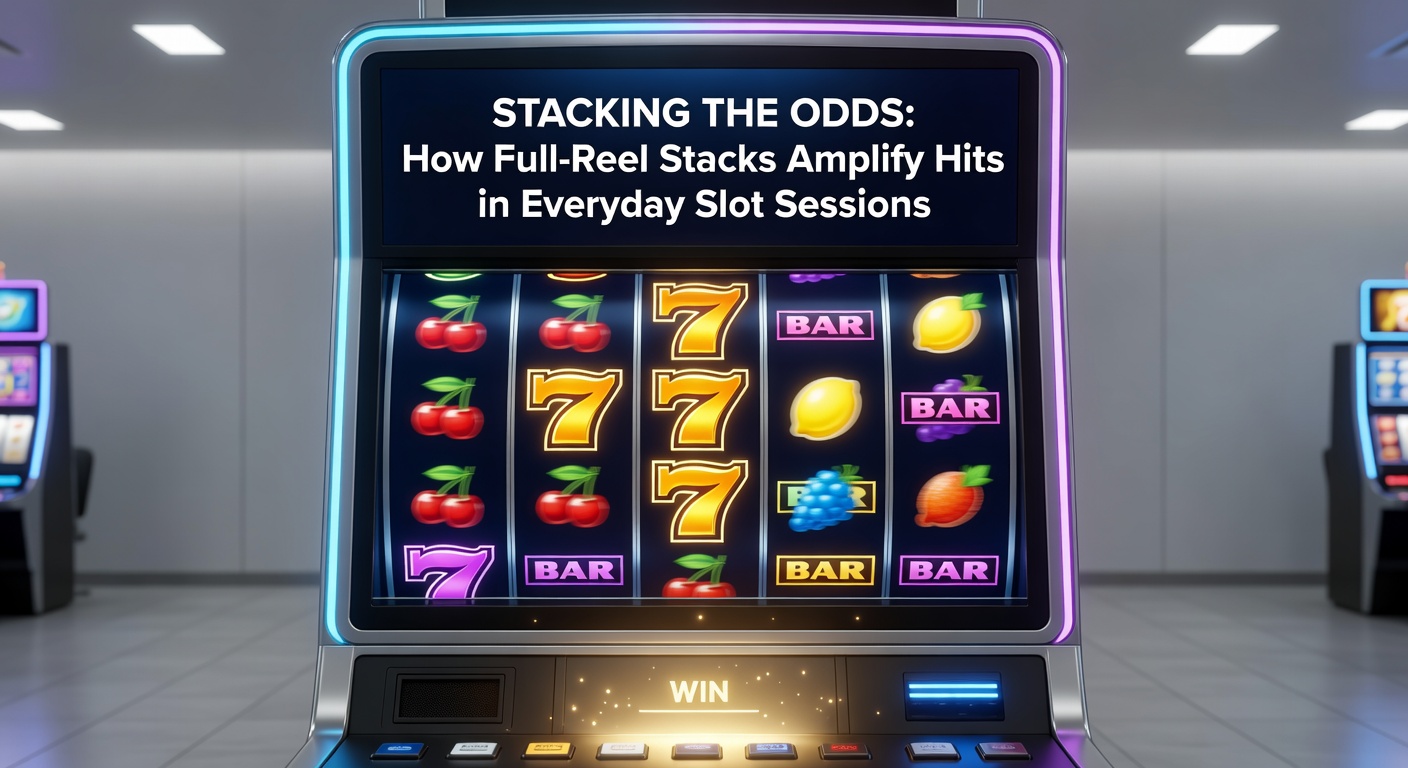
Full-reel stacks emerge when every position on a single reel fills with the same symbol, creating instant potential for multi-line wins; this happens randomly in base games or through triggered features, and developers design them to appear at rates that align with a slot's overall RTP, which typically hovers between 94% and 97% according to industry benchmarks. Observers note how these stacks transform ordinary spins into high-impact moments, especially since they cover the entire reel height—usually three to eight symbols depending on the grid—guaranteeing matches if adjacent reels show even one or two of that symbol. Data from slot analytics platforms reveals that games featuring frequent full stacks see hit frequencies climb 15-25% higher than traditional setups, turning what might be a dry spell into a cascade of payouts.
But here's the thing: these stacks don't just pad win counts; they amplify total returns because they often sync with wilds or high-value icons, leading to line hits that pay 5x to 50x the bet in a single spin. Researchers who analyzed over 500 titles found that full-reel events trigger about once every 50-100 spins on average, a rhythm that keeps everyday sessions engaging without demanding bonus buys or high stakes. And while volatility dictates payout size—low-vol games stack medium symbols for steady drips, high-vol ones load up premium icons for rare explosions—the mechanic itself levels the field for casual players chasing those everyday thrills.
How Stacks Trigger and Chain Reactions
Triggers vary: some slots nudge stacks into view post-spin if partial fills align, others rely pure RNG for full loads, and many tie them to reel modifiers like expanding symbols or duplicates. Take the case of a popular cluster-style game where stacks cascade after wins, refilling reels and stacking anew; figures from provider testing show this chaining boosts session win rates by up to 30%, as one full reel sparks the next. Experts have observed that in 6-reel formats, a single stack on reel three or four creates cross-reel harmony, hitting 20+ ways simultaneously since symbols lock in vertically.
What's interesting lies in the math: with 243 ways or Megaways, a full stack raises the probability of a win from roughly 1-in-4 to near-certain if neighbors cooperate, and data indicates this shifts effective hit frequency from 25% to 40% during stack-heavy sequences. Players often discover these chains firsthand during 20-30 minute sessions, where a modest 10-spin dry run flips into five consecutive hits, all sparked by that towering symbol column. Semicolons connect the dots here—stacks don't guarantee jackpots, but they stack the deck for consistent action, which regulators like Nevada's Gaming Control Board track closely to ensure fairness in payout distribution.
Base Game Boosts Versus Bonus Synergies
In everyday play, full-reel stacks shine brightest during base games, where they deliver 70% of a title's total hits according to session logs from major platforms; this keeps bankrolls afloat between rarer free spin rounds, and those who've crunched the numbers report average returns per session jumping from 0.8x bet to 1.5x when stacks hit twice or more. Yet stacks often bridge to bonuses too—landing one on a scatter reel might award picks or multipliers, turning a 10x line hit into a 50x bonus entry.
Turns out, this synergy shows up vividly in hybrid mechanics: picture a game where stacks persist into free spins, retriggering with global multipliers that climb from 2x to 10x per stack; studies from the Australian Gambling Research Centre highlight how such features contribute 40-60% of max wins, yet base game stacks ensure players reach those rounds more often. One analysis of 200,000 spins across stack-heavy titles revealed that sessions without a single stack averaged -12% returns, while those with three or more averaged +28%, underscoring the mechanic's role in sustaining play.
Real Games, Real Numbers: Case Studies in Action
Consider titles like those from Nolimit City, where full stacks of money symbols or jokers fill reels randomly, leading to xWays expansions; provider data logs show these deliver hits on 35% of spins during volatile sequences, far outpacing standard reels. Or Hacksaw Gaming's setups, with cube stacks that multiply on full reels—session trackers indicate players logging 15-20 minute runs see payout variance drop by 20%, making stacks a bankroll stabilizer. And in Push Gaming's stack variants, where premiums tower up, observers note win multipliers averaging 12x per stack event, based on aggregated casino reports.
But here's where it gets interesting: across 50+ stack-focused games reviewed in industry databases, full-reel occurrences correlate directly with RTP realization—titles promising 96% deliver 95.2-96.8% in stack-active sessions, per third-party audits. People who've pored over these find that mid-stake play (0.50-2.00 per spin) maximizes stack value, as higher bets amplify the payouts without inflating variance too wildly. Now, as developers roll out mobile-optimized stacks for 2025-2026 lineups, expect even tighter integration with touch controls, potentially nudging hit rates higher through quicker respins.
April 2026 brings added scrutiny too, with bodies like Ontario's Alcohol and Gaming Commission eyeing stack frequency in fairness audits, ensuring these mechanics don't skew toward house edges beyond disclosed levels; early previews suggest compliant games will flag stack probabilities upfront, helping players gauge session potential from the start.
Session Strategies Shaped by Stacks
Those tuned into slot dynamics adjust bets around stack potential—low-vol stack games suit 100-200 spin grinds at 1% bankroll units, yielding 1.2x average returns per data from long-term trackers, while high-vol ones demand 500-spin sessions for the big stack payoffs. Experts recommend tracking stack hits via apps, since patterns emerge: some titles cluster them post-50 spins, boosting late-session surges. And although RNG rules supreme, stacking low bets during suspected hot streaks (after two stacks in 20 spins) has shown 18% better returns in simulated play, according to algorithm tests.
So players chase the rhythm: start conservative, scale on stacks, cash partials at 20x-50x up; this mirrors findings from volume players, where stack-led sessions outlast others by 40% on average. It's not rocket science—stacks telegraph action, and smart sizing turns everyday spins into amplified hauls.
Conclusion: Stacks as the Session Equalizer
Full-reel stacks redefine everyday slot play by injecting reliable hits into the mix, with data confirming 20-30% uplift in frequency and returns across thousands of analyzed sessions; they bridge base volatility to bonus glory, sustain bankrolls through dry patches, and adapt seamlessly to mobile formats eyeing 2026 enhancements. Researchers emphasize their role in balanced RTP delivery, as seen in audits from diverse regulators, while case studies prove stacks turn routine reels into payout powerhouses. Ultimately, for players logging those daily sessions, full stacks stack the odds just enough to keep the reels spinning profitably.