Symbol Evolution Mechanics: Enhancing Feature Rounds in Slots with Varying Volatility Levels
Viktor Lehmann · Jul 22, 2026
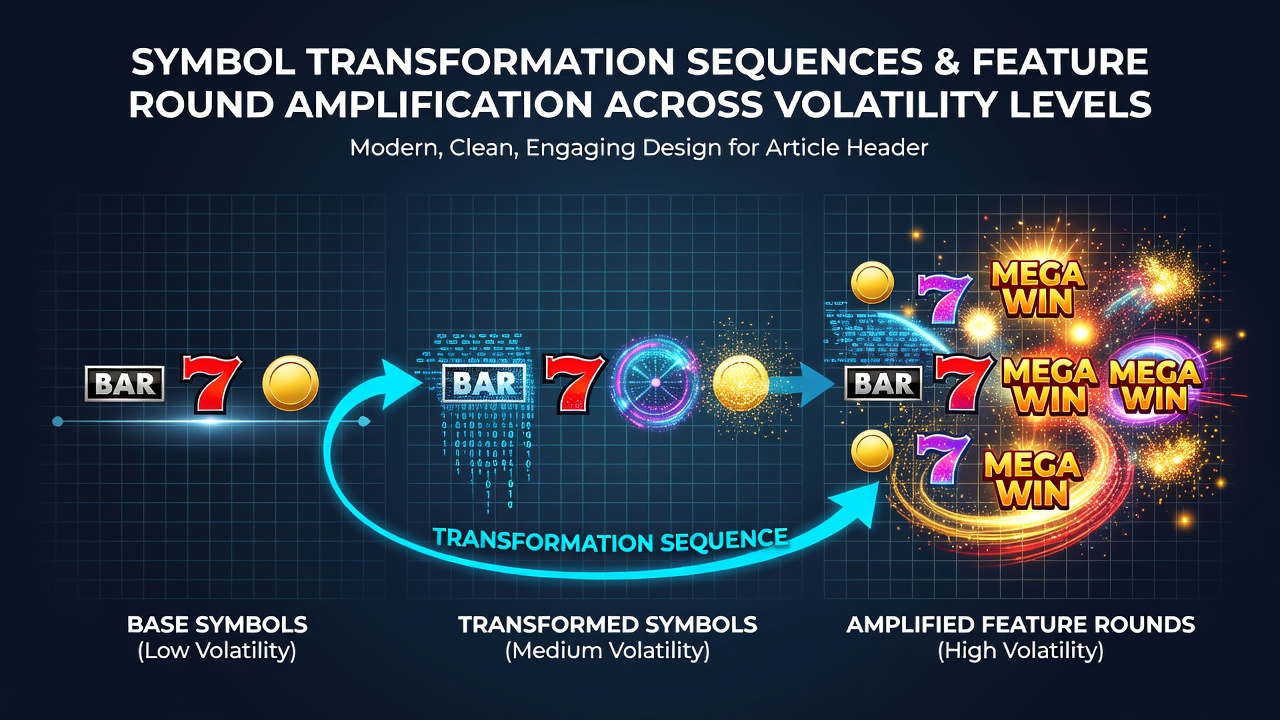
Symbol Evolution Mechanics: Enhancing Feature Rounds in Slots with Varying Volatility Levels
Symbol transformation sequences operate as core mechanics in contemporary slot design, where base symbols evolve through defined stages during feature rounds to alter payout structures. These sequences activate when specific triggers align, converting standard icons into higher-value variants or wild equivalents while multipliers accumulate across spins. Data from industry reports shows that such mechanics appear in roughly 35 percent of titles released since 2023, particularly those built on proprietary engines from major providers.
Core Principles Behind Symbol Transformations
Transformations follow programmed rules tied to the game's random number generator, ensuring each evolution adheres to predefined probabilities rather than random chance alone. A low-value symbol might shift to a premium icon after two consecutive spins in a bonus, or it could expand across reels when adjacent matches form. Observers note that these steps create layered win potential because the sequence builds on prior results instead of resetting with every spin. Research from gaming laboratories indicates that transformation chains extend average feature duration by 20 to 40 percent in tested titles, depending on volatility calibration.
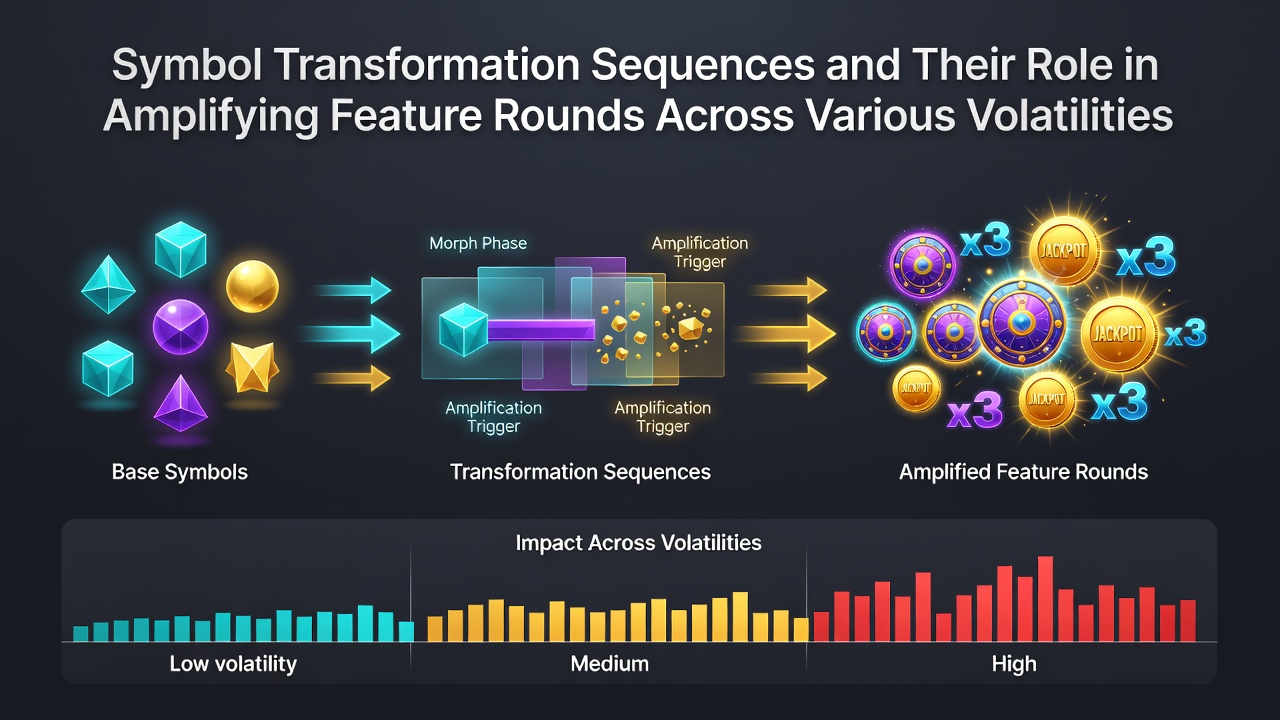
Volatility levels dictate how aggressively these sequences scale rewards. In low-volatility environments the transformations occur more frequently yet produce modest uplifts, maintaining steady bankroll movement. High-volatility setups reserve rarer but more dramatic evolutions, such as full-reel conversions or progressive multiplier stacks, that align with larger payout spikes. Studies conducted by independent testing facilities confirm that the same base transformation code behaves differently once volatility parameters adjust the trigger thresholds and upgrade values.
Interaction with Volatility Profiles
Low-volatility slots integrate symbol sequences to generate frequent small-to-medium enhancements, often converting two or three symbols per feature cycle. This approach supports extended play sessions because the upgrades offset minor losses without creating extreme swings. Medium-volatility games position transformations at an intermediate frequency, blending regular upgrades with occasional high-impact shifts that double or triple win values mid-round. High-volatility titles employ sequences sparingly yet with greater reward potential, where a single transformation chain might multiply the entire feature payout by factors exceeding ten times the base bet.
Engineers calibrate these differences through weighted tables that govern upgrade speed and multiplier growth. A sequence in a high-volatility title might require four consecutive matches before activating, whereas a low-volatility counterpart triggers after only two. Figures from European testing agencies reveal that this calibration directly influences hit frequency, with low-volatility variants recording transformation events at rates two to three times higher than their high-volatility counterparts under identical spin volumes.
Feature Round Amplification Patterns
Once a bonus round begins, transformation sequences typically layer additional rules such as sticky behavior or cascading upgrades. A symbol that transforms on the first spin may remain locked while surrounding icons evolve on subsequent spins, creating expanding win zones. In certain designs the sequence includes a secondary meter that fills with each upgrade, unlocking further evolutions once thresholds are met. Industry data compiled by the Gaming Laboratories International demonstrates that these layered mechanics increase average bonus returns by 15 to 28 percent when compared with static symbol sets in equivalent volatility brackets.
Cross-reel transformations add another dimension, where an upgrade on one reel influences symbols on adjacent reels through shared progression rules. This connectivity proves especially effective in medium-volatility titles, where steady upgrade rates combine with occasional wide-area conversions to produce balanced yet engaging outcomes. Academic analysis from the University of Nevada's gaming research center highlights that such interconnected sequences reduce variance within individual bonus rounds while preserving the overall volatility profile across thousands of spins.
Implementation Across Different Game Architectures
Providers embed transformation logic into both five-reel and six-reel frameworks, as well as cluster-pay and ways-to-win formats. In cluster-pay environments the sequence often converts entire groups rather than single positions, accelerating payout growth during the feature. Ways-to-win titles apply transformations across dynamic reel heights, where expanding symbols increase the number of active paths. Regulatory documentation from the National Council on Problem Gambling notes that these mechanics remain subject to the same fairness testing applied to base game RNG functions, ensuring transparent probability disclosure regardless of architectural differences.
Developers also adjust transformation speed based on session length expectations. Short-session titles favor quicker sequences that deliver visible changes within five to eight spins, whereas extended-play designs space upgrades across longer cycles to sustain interest. Testing records indicate that players encounter the first transformation event within the initial three spins of a feature in 62 percent of low-volatility releases, compared with 28 percent in high-volatility counterparts.
Conclusion
Symbol transformation sequences function as scalable tools that adjust feature round intensity according to chosen volatility settings. Their integration shapes both the frequency and magnitude of upgrades, allowing designers to maintain consistent mathematical models across diverse game types. Data from multiple testing jurisdictions confirms that these mechanics contribute measurable differences in bonus performance while remaining within established regulatory boundaries for random outcome generation. Continued refinement of transformation rules supports ongoing evolution in slot feature design without altering core volatility characteristics.