Wild Symbols in Transition: Charting Changes Across Slot Software Eras
Amir Lehmann · May 27, 2026
Wild Symbols in Transition: Charting Changes Across Slot Software Eras
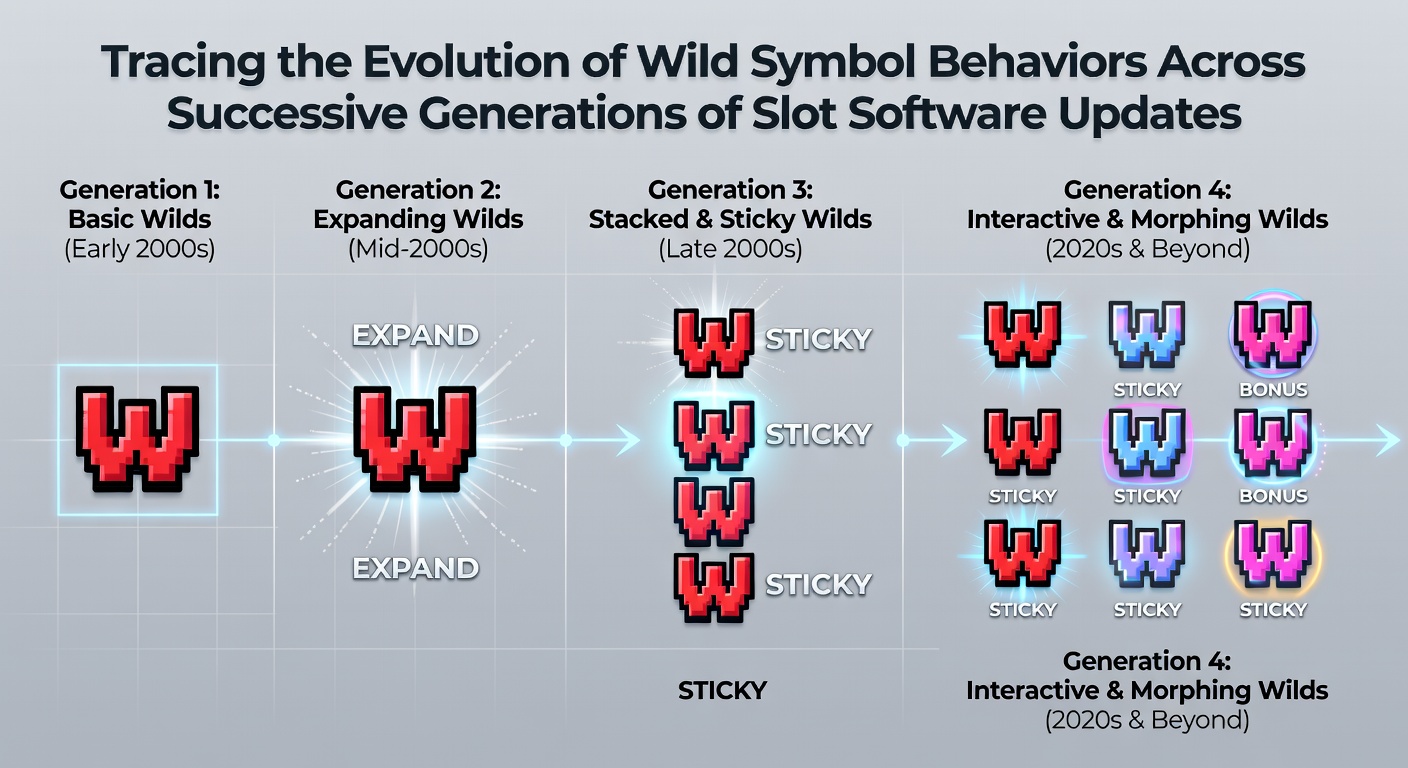
Wild symbols began as straightforward substitutes in the first generations of digital slot software, replacing missing icons to complete paylines while developers focused on basic reel mechanics and fixed payout structures. Those early implementations, common in titles from the late 1990s through the early 2000s, operated under simple rules where a wild would fill any gap without altering values or triggering additional events. Data from industry archives shows that providers such as Microgaming and IGT relied on these static replacements to maintain consistent random outcomes dictated by their RNG systems.
Initial Software Frameworks and Limited Interactions
Programmers coded wilds with minimal attributes during those first updates, often restricting them to specific reels or excluding them from bonus rounds entirely, and this approach kept computational loads low on the hardware available at the time. Observers note that successive patches introduced minor variations, such as wilds appearing only during certain bet levels, yet core behavior remained substitution without expansion or persistence across spins. Research from gaming technology reports indicates these constraints stemmed directly from processing limitations rather than design intent.
Expansion and Stacking Mechanics in Mid-Generation Updates
By the mid-2010s, software iterations from NetEnt and Playtech incorporated expanding wilds that covered entire reels upon landing, a shift that altered payout calculations and increased the frequency of multi-line wins without changing the underlying probability models. Stacked wilds followed in later patches, allowing multiple instances to occupy adjacent positions and form larger winning combinations on the same reel set. Figures from eCOGRA audits reveal steady integration of these behaviors across hundreds of titles released between 2012 and 2018, with each update layering new visual effects and animation sequences onto the established substitution framework.
Sticky wilds emerged next in targeted software releases, remaining fixed in place while surrounding reels respun, and this mechanic extended session length by creating repeated substitution opportunities within a single paid spin sequence. Developers refined the coding to handle multiple sticky instances simultaneously, preventing overlaps that could crash reel evaluations, while maintaining compliance with regional testing standards. One study of archived game logs demonstrates how these additions boosted average feature duration across successive versions without modifying RTP percentages.

Multiplier Integration and Shifting Behaviors in Recent Iterations
Recent generations of slot engines, updated through 2025, added multipliers to wild symbols that scale winning amounts based on the number of wilds involved or the current reel position, and this layering required more sophisticated evaluation algorithms to track cumulative effects across paylines or cluster formations. Shifting wilds, introduced in patches from providers like Big Time Gaming, move one position per respin while retaining their substitution role, creating dynamic reel states that evolve within a single feature cycle. According to data compiled by the Nevada Gaming Control Board, these interactive elements appear in over 40 percent of new releases certified after 2020, reflecting incremental code optimizations that support real-time position tracking.
Software updates in May 2026 introduced hybrid wild variants capable of switching between expanding and sticky modes depending on bonus meter thresholds, a change built on prior frameworks yet requiring fresh RNG certification to ensure outcome integrity across mobile and desktop platforms. Those who've analyzed update logs observe that such conditional behaviors rely on server-side flags rather than client-side rendering, reducing latency during transitions while preserving fairness metrics. Academic papers on game mathematics, including work from the University of Nevada Reno gaming labs, document how these evolutions maintain house edge consistency even as visual complexity increases.
Cross-Platform Adaptations and Regulatory Influences
Platform-specific adjustments in successive software generations addressed differences between desktop and mobile rendering, with wild symbols scaled or repositioned automatically to fit varying screen sizes without altering core substitution logic. Australian Communications and Media Authority guidelines prompted several providers to log wild behavior statistics separately in audit trails starting around 2023, ensuring traceability across update cycles. External links to regulatory summaries highlight how these requirements accelerated the adoption of modular code structures that allow wild attributes to be toggled independently of base game reels.
Cluster-pay and Megaways engines further modified wild deployment patterns, permitting wilds to fill gaps within grouped symbol arrangements or expanding way counts dynamically, and data from industry reports shows these adaptations appeared first in high-volume markets before spreading globally through shared software libraries. Observers note that each generation refined collision detection between wilds and special symbols, preventing unintended overlaps that could skew payout distributions.
Conclusion
Tracing these developments reveals a clear progression from static substitution to layered, conditional interactions shaped by hardware advances, regulatory demands, and iterative testing protocols. Successive generations of slot software continue to build upon established foundations, incorporating new attributes while preserving the random integrity central to all certified titles.